 CYNDRA
You're probably already feeling the pressure. Your team is buried in repetitive work, dashboards arrive late, customer replies depend on who's online, and every department has its own stack of tools that don't quite talk to each other. Meanwhile, competitors seem to be shipping faster, responding faster, and learning faster.
That's the environment where AI transformation consulting becomes useful. Not as a trend purchase, and not as a strategy deck that gets filed away after the kickoff. It matters when a business needs to change how work gets done, inside sales, support, operations, finance, recruiting, and leadership reporting.
Table of Contents
- Beyond the Hype What Is AI Transformation Consulting
- What an AI Transformation Consultant Actually Delivers
- Real-World Impact Use Cases and Measurable KPIs
- The Engagement Path From Consultation to Transformation
- How to Choose Your AI Transformation Partner A Checklist
- Common Pitfalls and How to Avoid Them
- From Overwhelmed Operator to AI-Powered Leader
Beyond the Hype What Is AI Transformation Consulting
AI transformation consulting is the work of redesigning operations so AI becomes part of the business system, not a disconnected tool. That includes deciding where AI should be used, what data it needs, how it should connect to live systems, who owns it, and how teams will use it every day without adding friction.

Most leaders don't need another explanation of what large language models are. They need fewer manual handoffs, cleaner execution, and faster decisions. Good AI transformation consulting starts there. It treats AI as an operational design problem first and a model problem second.
Why this moved from optional to urgent
The category is expanding because companies no longer see AI as a side experiment. According to Zion Market Research on the AI consulting market, the global Artificial Intelligence consulting market was valued at approximately USD 8.75 billion in 2024 and is projected to reach USD 58.19 billion by 2034 at a 20.86% CAGR. That kind of growth tells you something practical. Leaders are paying for help because implementation is hard, messy, and tied to core operations.
The mistake is thinking consulting means advice alone. In this field, advice without operational follow-through usually becomes expensive indecision. The business still has the same bottlenecks, only now it also has a roadmap sitting in a shared folder.
AI transformation starts paying off when workflows change, not when presentations improve.
What it looks like in practice
A real engagement usually deals with problems like these:
- Sales teams need prospect research, outreach drafting, CRM updates, and pipeline summaries to happen with less manual effort.
- Operations leaders need live KPI dashboards built from Shopify, finance systems, ad platforms, or internal databases.
- Support teams need faster first responses and cleaner routing.
- Executives need cost visibility, governance, and proof that automation is reducing work rather than adding more software.
That's why the phrase AI transformation consulting means precisely what it says. It's not consulting about AI in the abstract. It's consulting that changes how the company runs.
What an AI Transformation Consultant Actually Delivers
The easiest way to understand the role is this. A strong AI transformation consultant acts like a general contractor for your next operating model. They don't just sketch the future state. They coordinate the blueprint, the build, the integrations, the handoff, and the fixes that appear once real users touch the system.

The strategic blueprint
The first deliverable is clarity. Not “we should use AI in marketing.” Actual decisions.
That means identifying specific workflows, ranking them by business impact and feasibility, mapping the systems involved, and defining success in operational terms. A consultant should leave you with a prioritized backlog, a financial model, and a change plan, not a vague recommendation to “explore automation.”
Typical blueprint outputs include:
- Use-case prioritization that separates high-value workflows from nice-to-have experiments
- Process mapping across tools like CRM, support systems, finance software, Slack, and internal databases
- Governance rules for access, approvals, auditability, and escalation
- Ownership design so someone inside the business is responsible after launch
The technical build
At this juncture, weak firms often disappear into abstraction. Strong ones get concrete.
They define the data flows, select the right model and orchestration pattern, connect business tools, build agent logic, set up testing, and create monitoring. If the workflow touches a CRM, Shopify, a ticketing system, or a finance platform, integration work matters more than prompt writing.
A mature program also needs technical discipline. Expert benchmarks summarized by Cybic's guide to AI technology consulting and digital transformation point to practices such as MLOps pipelines for retraining and monitoring, reusable components, shared feature stores, deployment templates, and governance gates aligned with frameworks such as NIST AI RMF or the EU AI Act. The same source notes that AI can reduce retail inventory levels by 20 to 30 percent through improved demand forecasting, which is one of the clearest examples of measurable operational value.
Practical rule: If a consultant can't explain how the system will be monitored after launch, they're not describing transformation. They're describing a demo.
The operational handover
A working system still fails if the team doesn't trust it, know when to use it, or understand where human review belongs.
This part includes training, workflow documentation, permissions, escalation paths, exception handling, and KPI reviews. In some cases, businesses also choose partners that build and manage production agents directly. One example is Cyndra's AI employee model, which focuses on installing and managing workflow-integrated agents rather than stopping at strategy.
The point isn't the vendor label. The point is the deliverable. You should end up with a live capability inside the business, not a concept.
Real-World Impact Use Cases and Measurable KPIs
The fastest way to tell whether AI transformation consulting is grounded in reality is to ask what changes on Monday morning. If the answer is “better strategic visibility,” keep digging. If the answer is “the ops lead no longer spends hours stitching together reports,” you're getting closer.
Sales and pipeline execution
Sales teams usually don't need more lead lists. They need less manual prep work around the list. Good AI implementations can research accounts, summarize recent company activity, draft personalized outreach, and push updates into the CRM with human approval where needed.
The KPI isn't “AI adoption.” It's workflow movement. Track lead qualification speed, outreach turnaround time, CRM completeness, and meeting preparation time. If the consultant can't tie the workflow to a revenue process, the use case is too loose.
For adjacent people workflows, it's worth reviewing practical HR automation strategies because recruiting, onboarding, and internal approvals often share the same bottlenecks as sales ops. The best transformation work looks across departments, not inside one silo.
Operations and reporting
Operations teams often run on hidden manual labor. Someone exports from Shopify, someone else cleans ad data, finance sends a spreadsheet, and a manager combines it all into a dashboard by the end of the week.
That pattern is a strong fit for AI-enabled process redesign, especially when paired with workflow automation. A useful reference is Cyndra's write-up on business process automation with AI, which reflects the broader reality that operational AI creates the most value when it connects live systems rather than generating isolated summaries.
Useful KPIs here include:
- Reporting cycle time from raw data to leadership-ready dashboard
- Manual touchpoints required to produce recurring reports
- Data freshness in decision-making views
- Exception handling time for anomalies or missing records
Supply chain and forecasting
Some use cases have cleaner economics than others. Inventory planning is one of them. Expert benchmarks show that AI can reduce retail inventory levels by 20 to 30 percent through improved demand forecasting, as noted earlier from the Cybic source. That matters because it connects AI directly to working capital, stock availability, and operational planning.
Support and service workflows
Support is another area where operational design matters more than model novelty. A consultant should define which questions AI handles, where it pulls answers from, when it hands off to a human, and how responses are reviewed.
Good support automation doesn't try to replace judgment. It removes repetitive triage so human agents can handle exceptions, escalations, and edge cases.
The KPI mix usually includes first-response speed, routing accuracy, deflection quality, and resolution consistency. The right setup feels less like a chatbot project and more like a service operations redesign.
The Engagement Path From Consultation to Transformation
A lot of buyers hesitate because they can't see the path. They assume AI consulting will become an open-ended engagement full of workshops and shifting scope. The stronger version is more structured than that.
A typical engagement follows a staged model with clear outputs, timelines, and decision points.

The early phases
According to Whitehat SEO's overview of AI consulting methodology, AI transformation consulting engagements commonly follow a 4 to 5 phase methodology with Discovery lasting 1 to 3 weeks, Strategy 2 to 4 weeks, Pilot 4 to 8 weeks, Implementation 2 to 6 months, and Post-Launch Optimization 4 to 12 weeks. The same source states that measurable ROI is typically realized in 12 to 24 months for most organizations.
That structure is useful because it forces sequencing.
- Discovery identifies bottlenecks, current systems, data dependencies, and team constraints.
- Strategy narrows the field to a manageable set of use cases and defines the business case.
- Pilot tests one important workflow under real conditions.
Before moving further, it also helps to understand organizational readiness. A practical starting point is an AI readiness assessment, especially for teams that know they need AI but haven't yet mapped the blockers around data, ownership, or adoption.
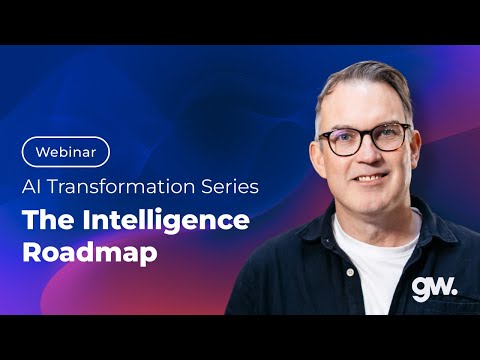
Here's a visual overview of how the journey tends to unfold:
Where projects usually succeed or stall
The pilot is not the finish line. It's the proving ground. Many teams get something working in a test environment, then discover that production requires permissions, logging, exception handling, workflow changes, and user trust.
That's why implementation takes longer than the initial demo. It includes data pipelines, model refinement, integration with business systems, infrastructure setup, testing, and training. Those are the parts that make the system dependable.
What a buyer should expect at each stage
A solid consulting partner should be able to specify deliverables, not just activities.
| Phase | What should exist at the end |
|---|---|
| Discovery | Process map, stakeholder input, current-state issues |
| Strategy | Prioritized use-case backlog, financial logic, implementation path |
| Pilot | Working solution on one workflow, defined success criteria |
| Implementation | Production deployment, integrations, monitoring, user enablement |
| Optimization | KPI review, workflow tuning, governance updates |
The quality of an engagement shows up in the handoffs. If each phase produces something concrete, the project keeps momentum. If each phase produces another discussion, the project slows down fast.
How to Choose Your AI Transformation Partner A Checklist
The biggest selection mistake is choosing a firm that's strong at diagnosis and weak at operationalization. Plenty of consultants can run workshops, map opportunities, and produce an AI roadmap. Fewer can turn that roadmap into a system your team uses daily.
That gap matters because the hardest part of AI transformation usually arrives after the pilot. A critical underserved issue in this market is the last 60 days operationalization gap, where 70% of AI initiatives stall post-depilot due to lack of embedded workflow integration and continuous management. That's the period when the easy enthusiasm wears off and the business discovers whether the solution fits real work.
Questions that separate builders from advisers
Ask direct questions. If the answers stay conceptual, keep looking.
Production question
Ask: What happens between pilot approval and live deployment in our actual systems?
Listen for: integration work, permissions, testing, monitoring, fallback logic, and team rollout.Workflow question
Ask: How will this connect to our CRM, support stack, commerce tools, finance systems, or internal databases?
Listen for: specific tool-level thinking, not “we're tool agnostic.”Ownership question
Ask: Who manages the system after launch, and what does our team need to own?
Listen for: training, operating procedures, escalation paths, and governance.Measurement question
Ask: How do you define success after the pilot phase?
Listen for: operational KPIs, cost replacement, cycle time reduction, quality controls, and adoption inside workflows.Change question
Ask: How do you get frontline teams to trust and use the system?
Listen for: user enablement, role design, human review rules, and phased rollout.
Founders who haven't hired advisory partners before may also find this guide to vetting business consultants for startups useful. The context is broader than AI, but the evaluation discipline is the same. Look for specificity, proof of execution, and clarity about scope.
AI Transformation Partner Evaluation Checklist
| Evaluation Criteria | Why It Matters | Your Notes |
|---|---|---|
| Evidence of post-pilot delivery | Shows they can move from concept to production | |
| Integration depth | Determines whether AI fits existing workflows | |
| Team training approach | Affects adoption and long-term ownership | |
| Governance and security model | Protects business data and reduces operational risk | |
| KPI framework | Prevents vague claims and keeps value measurable | |
| Support after launch | Closes the operationalization gap | |
| SaaS replacement thinking | Reveals whether they reduce complexity or add to it |
A good partner should make the work feel more concrete, not more mysterious. If you leave the sales process with less clarity than you started with, that's a warning sign.
Common Pitfalls and How to Avoid Them
Most AI failures don't come from the model being bad. They come from the business wrapping bad process design around the model. That's why the most expensive mistakes often look reasonable at first.

Pilot purgatory and SaaS bloat
The first trap is confusing activity with progress. Teams launch a pilot, collect feedback, maybe even show a working demo, then never embed it into the workflow. The business has “done AI” but nothing changed operationally.
The second trap is adding more tools to solve the first trap. Instead of reducing friction, the company creates another layer of subscriptions, dashboards, and disconnected automations. A critical data point here is that 54% of enterprise AI projects increase total cost of ownership due to redundant SaaS subscriptions, poor data governance, and lack of MLOps practices, according to the Gartner figure provided in the verified data.
You avoid both traps by asking a harder question early. Is this project replacing work and tools, or just sitting on top of them?
Weak data foundations
A smart agent on top of unreliable data becomes a fast error generator. If orders, tickets, customer records, or product data are inconsistent, the AI layer will expose that problem quickly.
That's why teams should spend time on source quality, access rules, and dataset design before scaling. Practical work around AI training datasets is relevant here because transformation programs depend on what the system can reliably retrieve, summarize, classify, and act on.
Governance treated as a late-stage concern
Governance often gets postponed because it feels slower than shipping. In practice, it's what keeps the system usable. Teams need to know who can approve actions, what gets logged, where human review is required, and how exceptions are escalated.
Don't wait for scale to design controls. By then, bad habits are already embedded in the workflow.
A simple prevention checklist
- Start with one painful workflow that already has visible business cost
- Design for replacement so the new system removes manual work or redundant tools
- Instrument the workflow with clear KPIs before launch
- Set review rules early for approvals, audit logs, and exception handling
- Train users in context so they learn inside the actual process, not in a generic demo
The best AI programs are disciplined. Not flashy. Disciplined.
From Overwhelmed Operator to AI-Powered Leader
The leaders who get real value from AI usually make one shift in mindset. They stop treating AI as software to buy and start treating it as an operating capability to build.
That changes the evaluation criteria. The question isn't whether a model can generate text, summarize a file, or answer a prompt. The question is whether the business can install AI into the daily flow of work in a way that reduces drag, improves decisions, and holds up under real usage.
That's where AI transformation consulting earns its keep. Done well, it turns scattered experiments into production systems, replaces repetitive manual coordination with structured automation, and gives teams a way to scale output without just adding headcount or more SaaS.
The primary win is durability. A business that embeds AI into sales execution, reporting, support, forecasting, and internal operations doesn't just move faster for a quarter. It builds a stronger operating system.
Choose a partner that can cross the distance from pilot to production. That's where the business case becomes real.
If you're evaluating partners and want a practical path from consultation to live workflow automation, Cyndra focuses on installing, training, and managing AI employees that integrate with existing tools and support real operational use cases across sales, support, operations, marketing, and recruiting.