 CYNDRA
Most advice on sales outreach automation starts with the wrong problem. It tells you to add more personalization, generate more variants, and expand the sequence until your calendar fills. In production, the copy is rarely the first constraint. Domain health, signal quality, and CRM control determine whether an AI SDR can keep operating long enough for good messaging to matter.
Adoption has already moved beyond experiments. A 2026 industry summary reported that 81% of sales teams use AI in some capacity, while 87% of sales organizations use AI across tasks such as prospecting, forecasting, lead scoring, and email drafting. Only 8% of sales reps said they don't use AI at all. The same summary reported that 41% of enterprise B2B teams had at least one AI SDR in production in Q1 2026, compared with 12% a year earlier. The underlying 2026 AI prospecting benchmarks show why the operating model needs to change.
The practical question isn't whether an agent can write a plausible email. It can. The question is whether your system knows who should be contacted, why now, through which channel, under what sending constraints, and when a human must take over.
Table of Contents
- Rethinking Automated Outbound for the AI Era
- Protecting Domain Health and Inbox Placement
- Engineering High-Converting Outreach Sequences
- Triggering Outreach with Real-Time Buyer Signals
- Integrating AI Agents with Your Core Tech Stack
- Operationalizing and Scaling Your AI Workforce
Rethinking Automated Outbound for the AI Era
The popular model treats outbound as a writing problem. A prospect enters a static list, an AI researches the account, a prompt produces a personalized email, and a sequence handles the follow-up. That workflow is easy to demonstrate and difficult to run safely at scale.
A production AI SDR needs a different architecture. It must detect a meaningful account signal, enrich that signal with reliable context, check the CRM for exclusions, select an appropriate channel, create a message that reflects the event, and enroll the contact only if the sending infrastructure can support another conversation. Personalization is one output of that system, not the system itself.
The adoption curve makes this distinction important. AI-augmented outbound volume in the cited 2026 benchmark averaged 7,400 messages per rep per month, compared with 1,150 for human baseline workflows, while reply rates became harder to preserve as volume expanded. The same benchmark summary points to a basic operational truth: generating more messages doesn't guarantee more useful conversations.
Automation is an operating system
Sales outreach automation has followed the broader history of CRM. The progression moved from enterprise sales-force automation, through browser-based SaaS CRM, toward AI-enabled systems that can query records, score leads, research accounts, and draft communications. The history of CRM and sales-force automation places major milestones in 1993, when Tom Siebel founded Siebel Systems, 1999, when Salesforce was founded, and 2004, when Salesforce's IPO helped validate SaaS as a business model.
That history explains why AI SDRs can't be evaluated like standalone email tools. The useful unit is the workflow, not the message. A workflow has inputs, permissions, suppression rules, feedback, and measurable outcomes. If the agent can't read the account's current state or write its activity back to the source of truth, it isn't autonomous. It's a disconnected content generator.
Practical rule: More personalization tokens don't compensate for a bad trigger, a damaged domain, or stale CRM data.
Teams building the human layer still need clear role design. An AI employee can handle research, prioritization, drafting, and routine follow-up, while a human SDR or account executive handles judgment-heavy conversations. If you're defining that division of labor, a resource such as Best place to hire SDRs can help clarify which responsibilities belong with human SDR capacity and which can be systematized.
The strongest programs therefore begin with infrastructure. They define acceptable signals, protect sending reputation, connect every action to CRM state, and reserve human attention for moments that require interpretation. The email is important, but it sits at the end of a chain of operational decisions.
Protecting Domain Health and Inbox Placement
The fastest way to undermine an AI-driven outbound engine is to optimize message volume before protecting deliverability. An agent can produce relevant copy indefinitely, but recipients can't reply to messages that never reach the inbox. Independent 2026 coverage identifies warmup, inbox placement testing, domain-health monitoring, spam checks, and mailbox-rotation guidance as common gaps in outbound stacks, and warns that over-sending can damage sender reputation quickly. Coverage of multichannel sales outreach tools in 2026 also describes domain reputation collapse as a factor that can cap many AI SDR deployments within their first 90 days.

Build the sending foundation first
Start by separating your primary corporate domain from outbound infrastructure where appropriate. The objective isn't to hide poor practices. It's to prevent a testing mistake or an aggressive campaign from putting normal customer and employee mail at risk. Every sending domain and mailbox should have authenticated identity controls, clear ownership, and a documented escalation path when reputation deteriorates.
Use a gradual warmup process rather than opening at maximum capacity. New domains need a measured increase in activity, and the team should watch delivery behavior before adding more mailboxes or launching additional sequences. The infographic's operational guidance recommends keeping daily volume under 50 for a new domain and ramping up gradually, but treat that as a starting guardrail, not a universal permission to send at that level.
A practical setup includes:
- Authentication: Configure SPF, DKIM, and DMARC so receiving systems can verify sender identity.
- Mailbox separation: Keep outbound identities distinct from critical transactional or customer-support mail.
- Volume controls: Apply limits per mailbox, domain, segment, and campaign instead of relying on one global cap.
- Suppression logic: Stop sends to unsubscribed, bounced, complained-about, and otherwise restricted contacts immediately.
- Monitoring: Track inbox placement, bounce behavior, spam complaints, blacklist status, and domain health continuously.
Treat reputation as a live production metric
Don't use open rate as your primary deliverability signal. It can be noisy and doesn't tell you whether a message reached the intended inbox. Watch positive replies, hard bounces, complaint activity, unsubscribe behavior, and placement tests together. The infographic specifies reply rates above 2%, spam complaints below 0.1%, and a 95%+ inbox-placement target as operating references, but these are control thresholds from the supplied visual brief, not guarantees of campaign performance.
When performance shifts, reduce volume before changing copy. Check whether one mailbox, domain, data source, or segment is responsible. Pause the affected stream, validate the records, review authentication and blacklist status, and only then resume with a smaller test group.
Deliverability is a capacity constraint, not a campaign setting. Your agent should ask whether the infrastructure can safely send the next message before it asks whether the copy can be improved.
Domain rotation also needs discipline. Rotating domains to evade complaints is not a sustainable strategy and can create a larger reputation problem. Use multiple sending identities only when there is a legitimate operational reason, apply consistent standards across them, and make sure every identity has the same suppression and monitoring controls.
The best AI SDR dashboard therefore has an inbox-health panel beside its sequence metrics. If the system reports meetings while hiding deteriorating placement, it isn't giving revenue operations enough information to manage risk.
Engineering High-Converting Outreach Sequences
Once sending infrastructure is stable, sequence design becomes a constraint-management exercise. The goal isn't to create the longest possible cadence. It is to give a relevant first message enough room to work, then use short, useful follow-ups without exhausting attention or mailbox capacity.
A practical 2026 benchmark recommends 4 to 7 touchpoints. The same benchmark reports average reply rates around 3.43%, top-quartile campaigns at 5.5% or higher, and elite campaigns at 10% or higher. It also reports that the first step generates 58% of replies, recommends first-touch messages under 80 words, and concentrates sending on Tuesday and Wednesday. The 2026 outreach automation benchmark supplies the reference points, but the strategic lesson matters more than any single target: the first message deserves the most human judgment.
Design the first touch as a decision
A strong first touch makes a narrow claim about a recognizable situation. It doesn't summarize the prospect's entire company, list every product capability, or bury the request beneath research theater. The writer should identify the trigger, connect it to a likely operational problem, and offer a low-friction next step.
Deep personalization can help, but it must be real. A company announcement, role change, product launch, or technology transition gives the agent a reason to write. Generic references to an industry or company size don't. The agent should also be allowed to return “no send” when the available evidence doesn't support a useful message.
The supplied personalization benchmark reports baseline unpersonalized first-touch emails at about 5% reply rate, compared with 12% for heavily personalized or human-customized first touches. It also reports that a seven-email drip built on the stronger opening produced 30% more responses than a drip using heavy auto-personalization alone, and nearly 50% more than a lightly customized first email. The personalization and automation benchmark supports a hybrid model: humans establish the quality bar, automation maintains the cadence.
| Metric | Benchmark target | Strategic implication |
|---|---|---|
| Sequence length | 4 to 7 touchpoints | Keep persistence bounded and measurable. |
| Average reply rate | Around 3.43% | Evaluate segments and positive replies, not volume alone. |
| Top-quartile reply rate | 5.5% or higher | Study the trigger, audience, offer, and first-touch quality. |
| Elite reply rate | 10% or higher | Treat as an exceptional benchmark, not a default forecast. |
| Replies from first step | 58% | Invest the most review time in the opening message. |
| First-touch length | Under 80 words | Make the message easy to scan and answer. |
| Preferred send window | Tuesday and Wednesday | Use as a starting hypothesis, then test by audience. |
Automate the follow-up without automating indifference
Follow-ups should add information, change the angle, or make the response easier. “Just checking in” is not a strategy. A later touch might share a relevant observation, ask a different qualifying question, or give the recipient a clear way to decline.
Use response-aware branching. A positive reply should stop the sequence and route the contact to a human. A neutral response may trigger a concise clarification. An unsubscribe, complaint, or negative response should activate suppression rather than another persuasion step.
The sequence also needs a terminal state. Contacts shouldn't remain in an indefinite drip because the system has no definition of completion. Mark the prospect as replied, qualified, disqualified, paused, unresponsive, or ready for a later signal. That state becomes valuable CRM feedback for future prioritization.
Triggering Outreach with Real-Time Buyer Signals
Static lists force an AI SDR to guess when a buyer might care. Signal-based workflows give the agent a reason to act. The signal can come from a company announcement, a leadership change, a funding event, a content interaction, a technology migration, or a meaningful change in an existing CRM record. The agent's job isn't to contact everyone who generates activity. It's to decide whether the activity creates a credible business conversation.
A useful workflow has four stages: signal detection, enrichment, activation, and engagement. Signal detection identifies the event. Enrichment adds firmographic, technographic, role, and account-history context. Activation applies qualification and suppression logic. Engagement chooses the message, channel, and handoff rules.

Give every trigger a business interpretation
A trigger isn't automatically intent. A leadership change may create relevance for one product and none for another. A content download might indicate research, while a technical-stack migration may indicate a project with a defined owner and timeline. The agent needs rules that translate events into account hypotheses.
For each trigger, define:
- Event: What happened, and how reliable is the source?
- Affected role: Who would own the resulting problem?
- Business hypothesis: Why might this event create a need?
- Required evidence: What additional data must be present before outreach?
- Suppression checks: Is there an open opportunity, support issue, customer relationship, or prior opt-out?
- Next action: Which channel and message are appropriate?
An enrichment step should also challenge the signal. If the company has no relevant team, no matching use case, or an active late-stage deal, the correct action may be to do nothing. Good automation produces qualified silence as often as it produces outreach.
The supplied 2026 market analysis frames effective automation as signal detection, signal enrichment, message generation, and sequence enrollment. It also notes that many tools still leave social steps manual and lack native intent-signal detection. The analysis of what works in outbound sales automation supports a measured approach rather than a promise of fully autonomous outbound.
Coordinate channels around context
Email shouldn't always be the first or only touch. A social interaction may justify a lighter message, while a high-value account signal may justify human research before any automated send. LinkedIn, phone, and email steps should share the same account state, otherwise the prospect receives disconnected requests from different parts of the team.
For implementation guidance on researching accounts and using AI in prospecting, see how to use AI for sales prospecting. The useful design principle is simple: the signal chooses the timing, the account context chooses the message, and the CRM chooses whether contact is permitted.
The supplied infographic includes an illustrative score above 80 trigger, a five-minute response window, and a 15% reply rate compared with 2% for static lists. Those figures belong to the visual's scenario and shouldn't be treated as a general performance guarantee. In production, calibrate scoring against your own positive replies, qualified meetings, and pipeline outcomes.
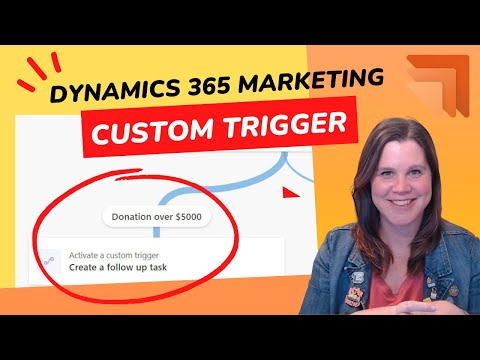
The agent should log the signal, confidence, source, decision, and resulting outcome. That record lets revenue operations distinguish a useful trigger from an attractive but unproductive event.
Integrating AI Agents with Your Core Tech Stack
An AI SDR without CRM context is a liability. It may identify a contact who matches the ideal customer profile, but that doesn't mean the person is eligible for outreach. They may be an existing customer, attached to an active support issue, involved in a late-stage negotiation, recently contacted by another rep, or listed in a suppression database.
Integration starts with a field contract. Define which system owns each piece of information, which fields the agent can read, which fields it can write, and what happens when records conflict. Don't let the agent infer critical account state from an email thread when the CRM has a structured opportunity stage or customer-status field.
Map fields to decisions
A useful mapping connects data to explicit agent behavior:
- Lifecycle status: Exclude customers, churned accounts, partners, employees, and disqualified records where appropriate.
- Opportunity stage: Suppress or reroute contacts associated with active evaluations, proposals, negotiations, or closed opportunities.
- Support status: Pause outreach when an account has an unresolved issue that could make a sales message inappropriate.
- Last activity: Prevent duplicate contact and define the minimum interval between human and automated touches.
- Ownership: Route replies and meetings to the correct account executive, SDR, or customer-success owner.
- Consent and preference: Apply opt-outs, regional restrictions, and communication preferences before enrollment.
- Signal history: Store the event, timestamp, source, and prior decisions so the agent doesn't repeatedly act on the same trigger.
These rules should run before message generation, not after. Otherwise the system spends effort creating a polished email that should never be sent.
Close the feedback loop
Every send, reply, meeting, qualification decision, and suppression event should return to the CRM. The loop needs more than activity logging. It should capture whether the reply was positive, negative, neutral, referral-based, or unrelated, then feed that outcome into scoring and future sequence decisions.
A practical routing design works like this:
- The agent detects and enriches a signal.
- The CRM confirms eligibility and ownership.
- The agent drafts or sends within approved permissions.
- A response parser classifies the reply.
- Positive or complex replies route to a named human.
- The CRM records the outcome and updates the account state.
- Suppression or nurture rules prevent contradictory follow-up.
The CRM isn't a reporting destination. It is the control plane for autonomous outreach.
Some workflows also need structured extraction from public pages, documents, or account materials. An LLM Scrape API from Context.dev can be evaluated where an agent needs machine-readable context, but the extracted information still needs provenance, validation, and clear permission boundaries before it influences a customer-facing message.
For a broader integration pattern covering agent permissions, data movement, and handoffs, see AI agent integration. Keep the architecture boring where it matters. Deterministic suppression, ownership, and logging rules should surround the model's more flexible research and writing behavior.
Operationalizing and Scaling Your AI Workforce
An AI SDR becomes valuable through management, not deployment alone. The first version will produce useful work and unacceptable edge cases at the same time. A revenue operations leader needs a review process that catches the second category before the system expands its sending footprint.
The most reliable rollout begins with a narrow use case. Choose one segment, one signal family, one sequence, and one human owner. Review every draft during the initial period, record failure patterns, and update the rules before introducing another audience. This is slower than switching on a broad campaign, but it produces evidence you can use.

A practical 60-day operating plan
Days 1 to 20, setup and baselines. Connect the CRM, sending accounts, enrichment sources, calendar, and response-routing system. Define the allowed audience, suppression fields, approval levels, and escalation paths. Establish baseline measurements for inbox placement, positive replies, meetings held, qualified opportunities, and pipeline attribution. Hold weekly quality reviews with the people who will own the workflow after launch.
Days 21 to 40, optimization and QA. Inspect the agent's research and drafts, not just campaign totals. Review incorrect claims, weak trigger interpretation, duplicated contacts, missed suppressions, and replies routed to the wrong owner. Test one meaningful variable at a time, such as the opening hypothesis or follow-up angle. The supplied roadmap visual includes a 15% deliverability-improvement goal for this phase, but use it as a planning target rather than a promised result.
Days 41 to 60, controlled scaling. Add trigger types only after the first workflow has stable controls. Expand audience coverage gradually, monitor each sending identity separately, and confirm that CRM feedback still reaches the agent before increasing activity. The visual includes a 50% sending-volume increase and a 3x return-on-ad-spend target for its scaling phase. Those are scenario targets in the supplied asset, not universal benchmarks.
Measure revenue quality
Open rates can provide directional information, but they shouldn't decide whether an AI SDR remains in production. Track positive reply rate, meetings held, qualified opportunities, pipeline generated, suppression accuracy, inbox placement, bounce behavior, and human follow-up time. Each metric answers a different operational question.
Use a weekly review to ask:
- Reachability: Are messages reaching intended inboxes without damaging domains?
- Relevance: Do replies confirm that the trigger and message fit the account?
- Conversion: Do positive replies become held meetings and qualified opportunities?
- Control: Did the agent respect exclusions, ownership, and opt-outs?
- Economics: Is the resulting pipeline worth the infrastructure, data, and human-review cost?
Cyndra's AI for sales automation is relevant to this operating model because the focus is not merely on generating messages. A production deployment needs workflow execution, CRM synchronization, approval controls, and visibility into what an AI employee did.
Keep a human quality owner in the loop after scale. That person should audit samples, investigate anomalies, approve material workflow changes, and retire triggers that generate activity without commercial value. The aim isn't to remove judgment from outbound. It's to spend judgment where it has the greatest effect.
If your team is ready to move beyond AI-written emails, Cyndra can install, train, and manage AI employees that research prospects, execute approved outreach workflows, sync activity to your CRM, and route meaningful replies to humans. Visit Cyndra to map a signal-based sales outreach automation workflow, validate the controls, and put a production-ready agent into operation.