 CYNDRA

A prospective client calls after dinner. Your receptionist has gone home, the attorney on call is driving, and the caller gets voicemail. They don't leave a detailed message. They return to Google and dial another firm.
You won't know whether that call involved a suitable matter, an existing client's urgent problem, or someone outside your practice area. That's the operational problem: an unanswered call leaves your team with nothing to qualify, route, or follow up on. In Clio's secret-shopper study of 500 law firms, only 40% answered the phone, according to its 2024 Legal Trends Report highlights.
The best law firm answering service isn't necessarily the provider with the most recognizable name. It's the one whose staffing, billing, and intake boundaries match your practice. A personal injury firm screening advertising inquiries needs something different from a solo estate-planning attorney booking consultations.
Buy the workflow after the greeting, not just the promise that someone will answer.
The choices below cover legal specialists, general receptionists, and human, AI, and hybrid models. They also distinguish per-minute, per-call, and volume-based billing, because a low starting fee tells you little about the eventual invoice. Alongside the core providers are specialized alternatives for firms that need deeper workflow customization, with practical limitations and a comparison table to support your shortlist.
Table of Contents
- 1. Lighthouse Legal
- 2. Answering Legal
- 3. Alert Communications
- 4. Smith.ai
- 5. Ruby
- 6. LEX Reception
- 7. Abby
- 8. PATLive
- 9. Posh
- 10. Moneypenny
- 11. LexHelper
- 12. Cyndra Custom AI Answering Agents for Law Firms
- Law firm answering services at a glance
- Pick the Model That Matches Your Call Volume, Not the Brand Name
1. Lighthouse Legal
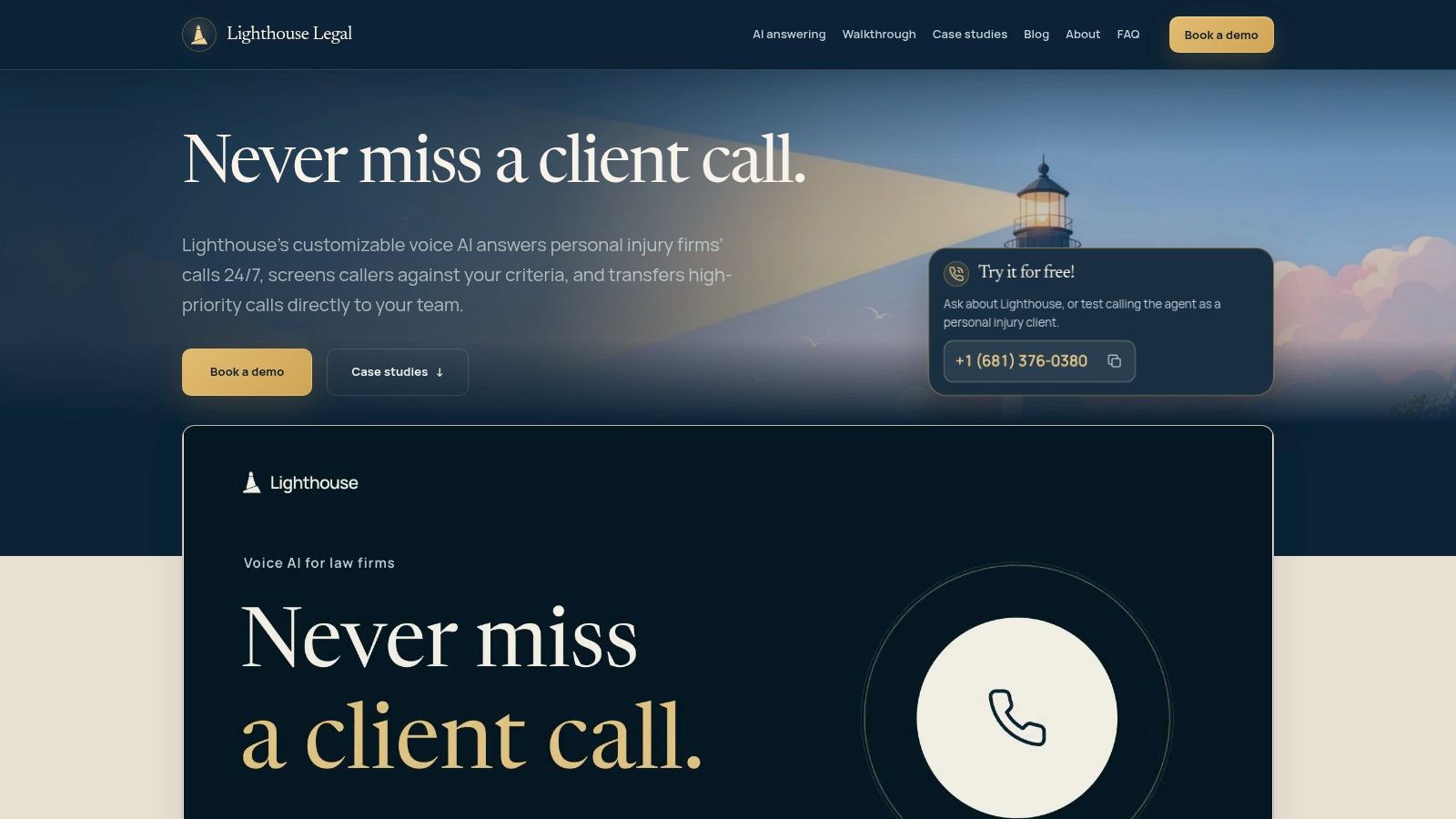
Lighthouse Legal is a focused choice for personal injury firms that need automated screening and direct transfers, rather than a general virtual front desk. Its AI-powered answering service for law firms supplements existing intake teams with continuous call coverage and firm-defined qualification.
The useful distinction is what happens before a transfer. Your firm supplies screening criteria, the agent collects relevant intake details, and qualified or high-priority callers can reach an attorney or intake employee. Callers can also request human assistance, which matters when someone doesn't want to continue with automation.
- Overflow coverage: Forward calls when your staff are unavailable or already handling other inquiries.
- Reviewable intake: Recordings, transcripts, and reports give supervisors material for checking qualification and handoff accuracy.
- Firm-controlled criteria: Screening follows your requirements rather than a generic definition of a promising case.
Where the Fit Gets Narrower
Lighthouse's personal injury focus is a strength for that practice area, not evidence that it suits every legal workflow. An estate-planning practice or litigation boutique should establish whether its requirements fit before treating this as a general receptionist replacement.
Its volume-based flat monthly model avoids per-minute metering, but flat-rate doesn't mean unlimited scope. Establish the applicable volume band, transfer behavior, and handling of repeat or irrelevant calls in the proposal.
Because calls produce recordings and transcripts, deployment also needs an approved recording-consent process, access permissions, and retention rules. The firm retains ownership of its call data, but ownership alone doesn't settle those operational questions.
2. Answering Legal
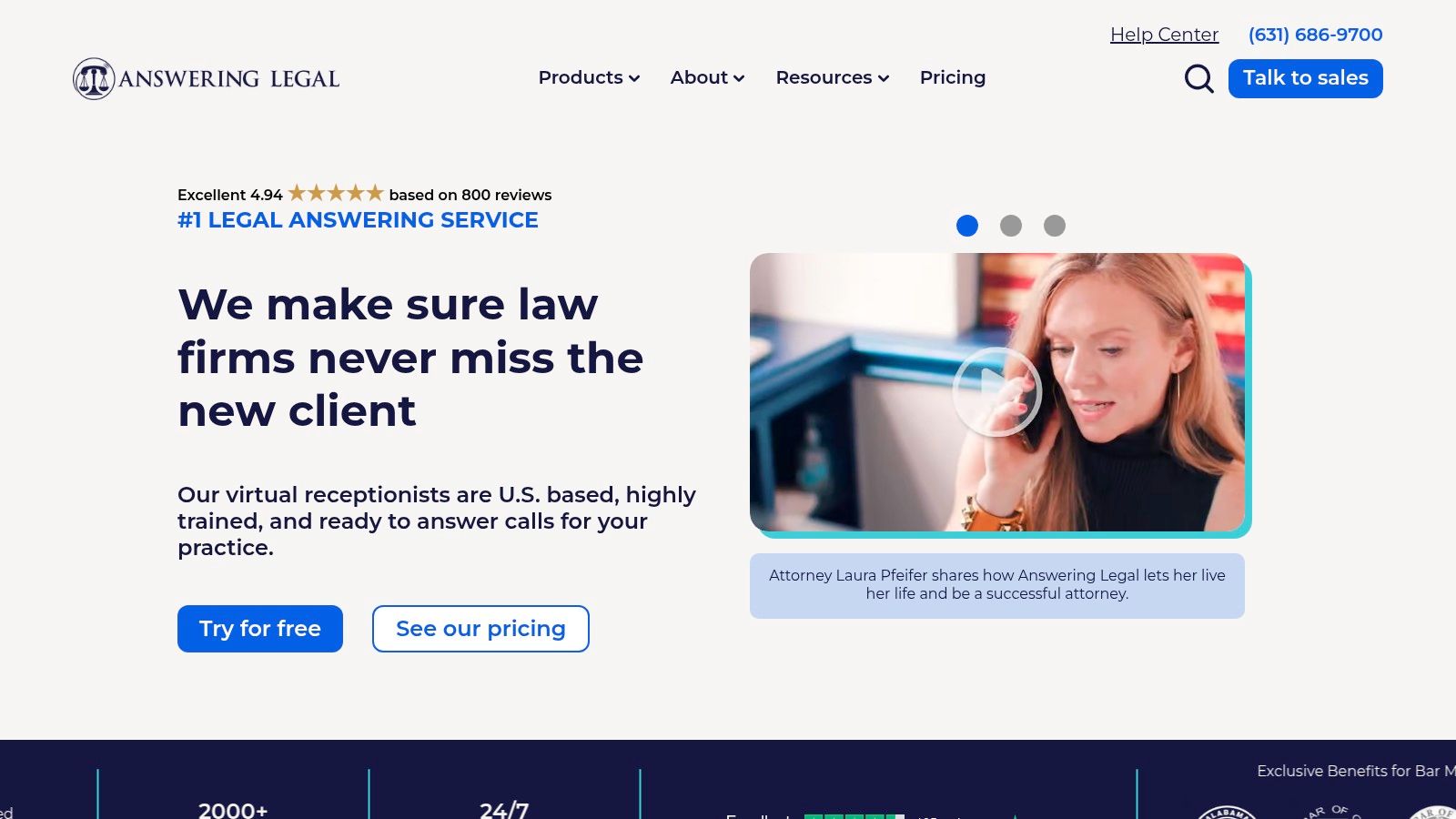
Choose legal-only human reception when caller reassurance matters more than automating the conversation. Answering Legal serves law firms with U.S.-based receptionists, customized intake, live transfers, and urgent-message handling.
It can support full-time reception, overflow, or after-hours coverage. That flexibility suits firms that want to retain their internal receptionist while removing the gaps around lunch breaks, competing calls, and staff absences.
The Billing Question Is Call Length
Per-minute billing deserves attention when callers are distressed or need help explaining their situation. A compassionate conversation may be exactly what the caller needs, but it still consumes the plan's allowance.
- Good fit: Firms that want human-led, practice-specific intake without replacing their internal team.
- Useful capability: Separate instructions for prospective clients, existing clients, and urgent inquiries.
- Limitation: Quote-based pricing makes scope, included integrations, and overage terms part of the buying decision.
Before launch, write down who receives each transfer and what happens when that person doesn't answer. A clear call-routing workflow matters whether the first voice belongs to a receptionist or an AI agent.
3. Alert Communications
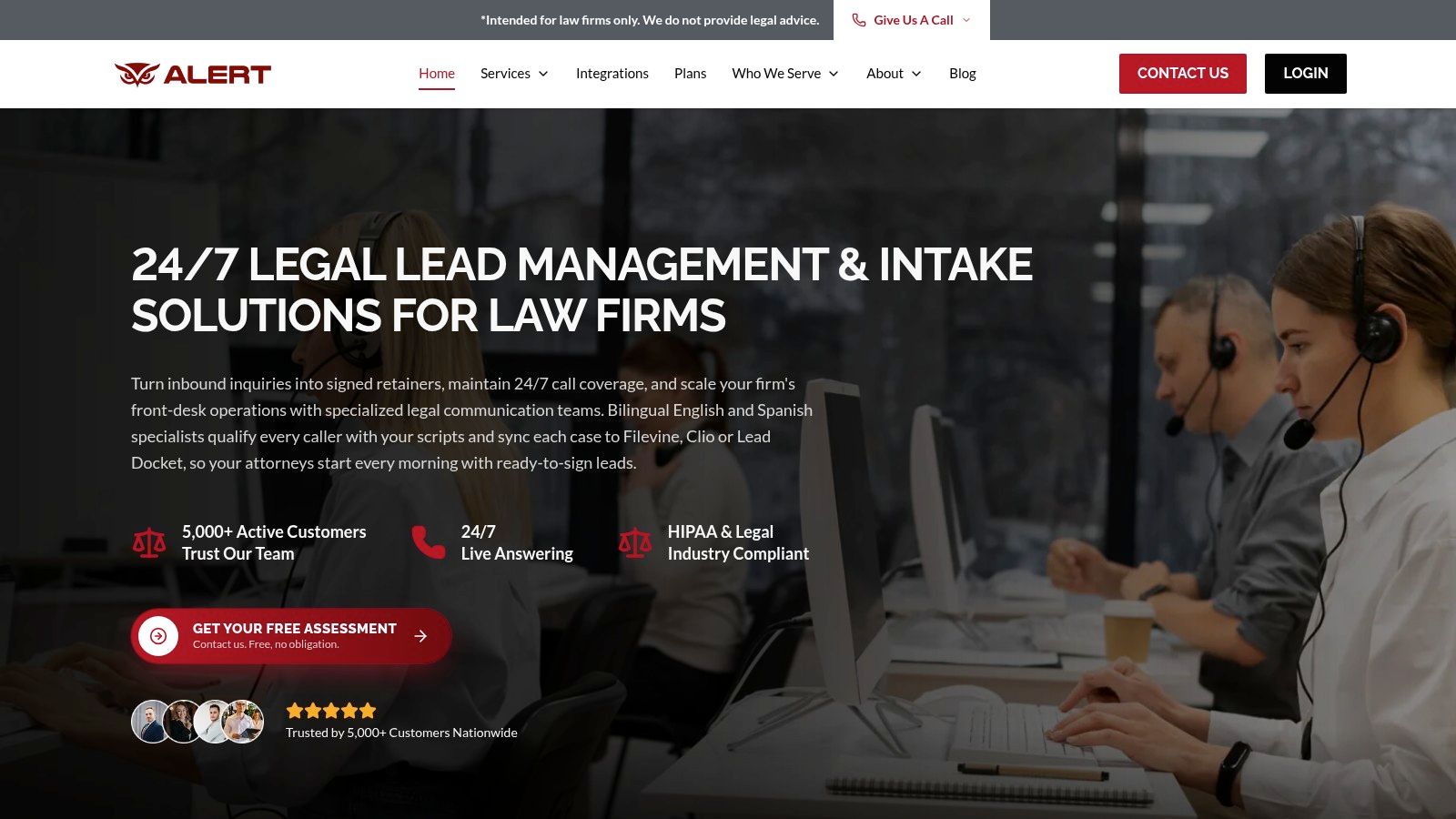
A firm that wants help moving an inquiry toward engagement should distinguish message-taking, intake, and retainer handling. Alert Communications offers legal-focused services across those stages, rather than treating every call as a message for someone else to resolve.
That broader scope can suit firms whose intake employees already have qualified inquiries waiting for follow-up. Buying additional reception alone won't fix that bottleneck; extending the workflow may.
- Basic coverage: Answer calls and deliver messages through defined channels.
- Deeper intake: Collect approved information and support the firm's intake process.
- Retainer support: Add engagement-related handling where the selected service includes it.
Don't Compare Unlike Plans
Alert's published plan structure makes the distinction between basic answering and more involved work visible. The trade-off is that a headline monthly fee won't describe the complete cost of intake and retainer activity.
Build the comparison around an actual call mix, including longer prospective-client conversations and routine existing-client calls. Have the proposal identify setup charges, overages, retainer-related fees, and excluded tasks.
Retainer handling still needs attorney-approved boundaries. Receptionists should follow your engagement process, not decide independently whether the firm has accepted a matter.
4. Smith.ai
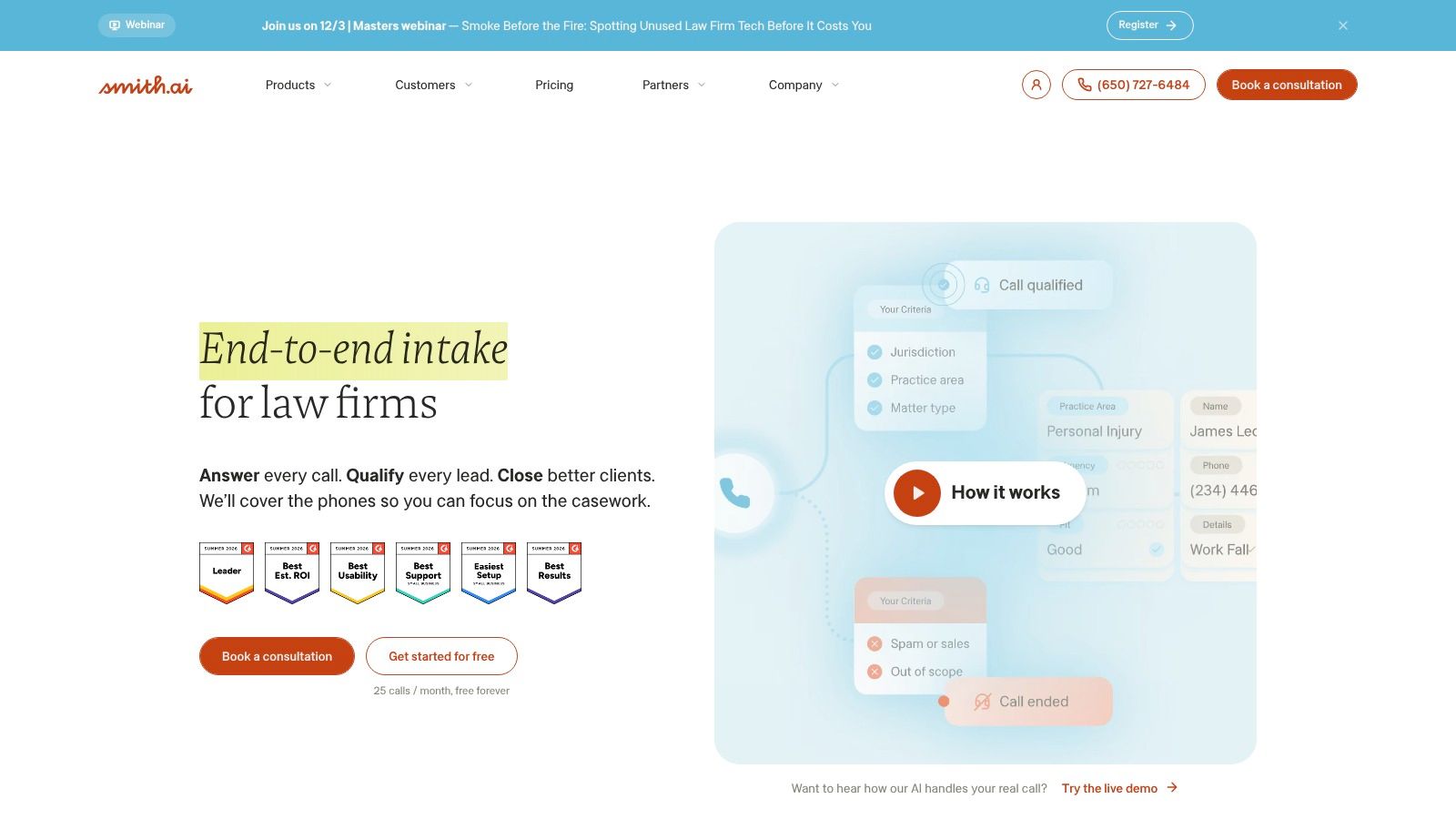
Smith.ai belongs on the shortlist when the unresolved decision is human versus AI versus hybrid. Its service models let firms evaluate those approaches without restricting the initial search to human-only or automated-only providers.
Per-call pricing is another meaningful distinction. When intake conversations vary in length, billing by the interaction can be easier to model than billing by elapsed minutes, provided you understand what counts as a chargeable call.
A per-call plan isn't automatically cheaper. It changes which part of your call mix drives the invoice.
Test the Handoff, Not Just the Voice
Routing, scheduling, summaries, and integrations can reduce intake administration. Optional functions such as conflict-check support need closer inspection: collecting names or searching records isn't the same as an attorney clearing a conflict.
Use an AI call assistant evaluation that includes interruptions, uncertain answers, emotional callers, and requests for a person. A polished demonstration won't tell you how escalation works when the intended recipient is unavailable.
The limitation: Add-on functions and overages can change the effective cost. Compare complete workflows, including scheduling and recording requirements, rather than base plans alone.
5. Ruby
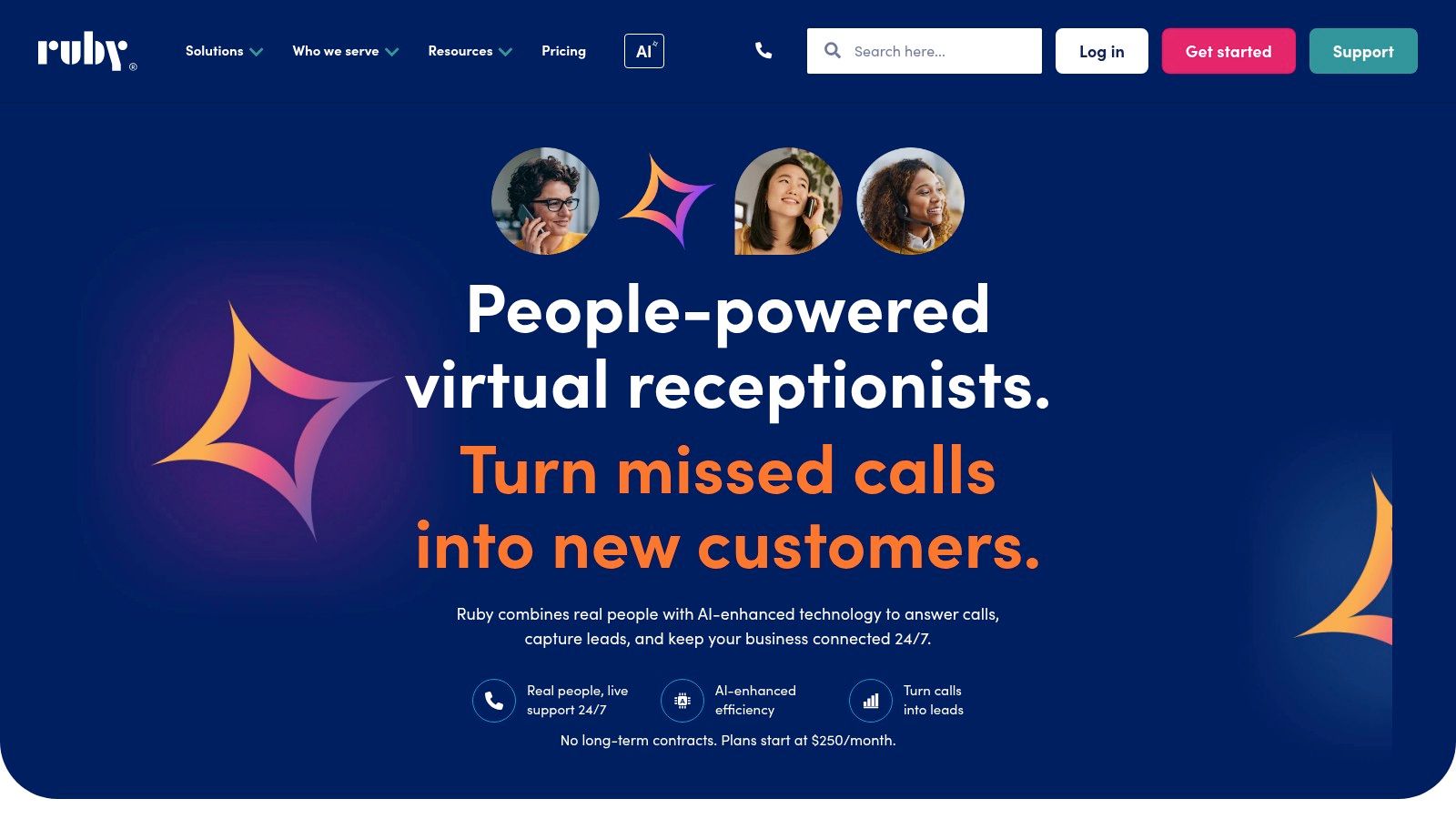
Ruby makes sense when you need a broader front desk, not a legal intake department. Ruby serves multiple industries and combines live phone answering with options for website chat, scheduling, lead capture, and customized routing.
That combination can suit a small firm whose inquiries arrive through both its website and telephone. English-Spanish support and listed legal-software integrations are useful, but the practical question is whether information reaches the correct record without staff copying it manually.
- Best use: Straightforward consultation requests, routine routing, and combined phone-plus-chat coverage.
- Operational benefit: Consistent greetings and handling instructions across external reception channels.
- Budget consideration: Minute-based billing makes conversation length relevant to total usage.
Legal Work Still Needs Legal Instructions
A multi-industry provider isn't automatically unsuitable for a law firm. It does mean your script must define legal boundaries explicitly, including what receptionists should collect, what they should avoid, and when they should stop and transfer.
Ruby is less compelling if you expect the provider to design complex, practice-specific qualification logic for you. Establish the included intake tasks, integration behavior, and overage treatment before comparing its price with a legal-only service.
6. LEX Reception
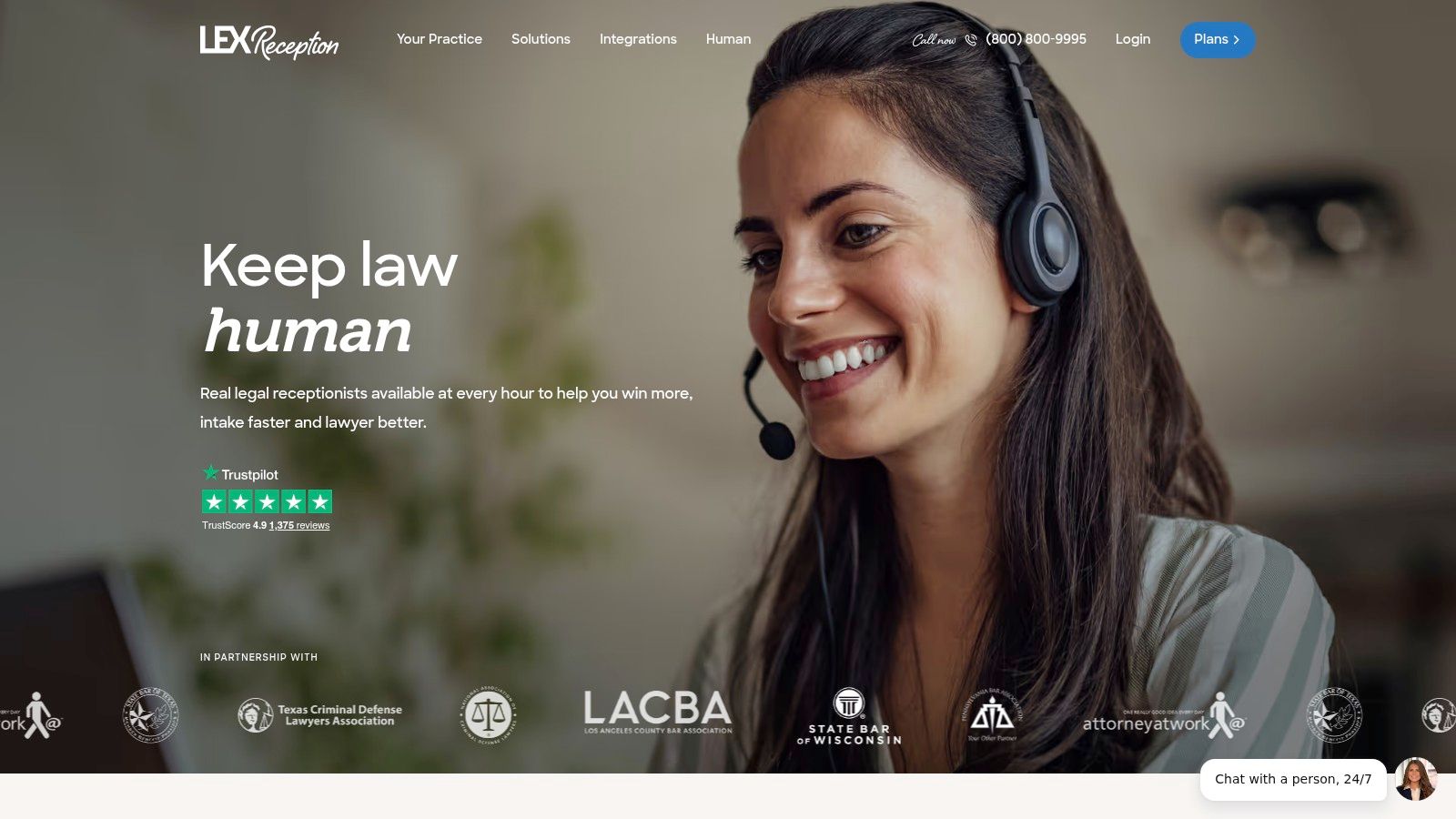
For firms that want live receptionists working from legal-specific scripts, LEX Reception is a direct alternative to general answering providers. Its offering includes legal intake, screening, consultation scheduling, bilingual support, and practice-management integrations.
The strongest use case is consistent human coverage with different rules for different circumstances. Business-hours overflow may lead to a warm transfer, while an after-hours inquiry may require limited screening and an assigned callback.
Script Quality Determines the Result
Give the service explicit instructions for new matters, existing clients, opposing counsel, and administrative calls. Don't let every category end in the same inbox with the same urgency label.
- Fit: Firms seeking a legal-focused virtual front desk or after-hours human coverage.
- Strength: Custom handling instructions tied to the firm's qualification and scheduling rules.
- Limitation: Pricing, trial boundaries, and included integration or scheduling functions need confirmation.
Treat its trial as a workflow test, not just a chance to hear a friendly greeting. Inspect whether staff can find the resulting intake record, understand its status, and identify who owns the next action without listening to the entire call.
7. Abby
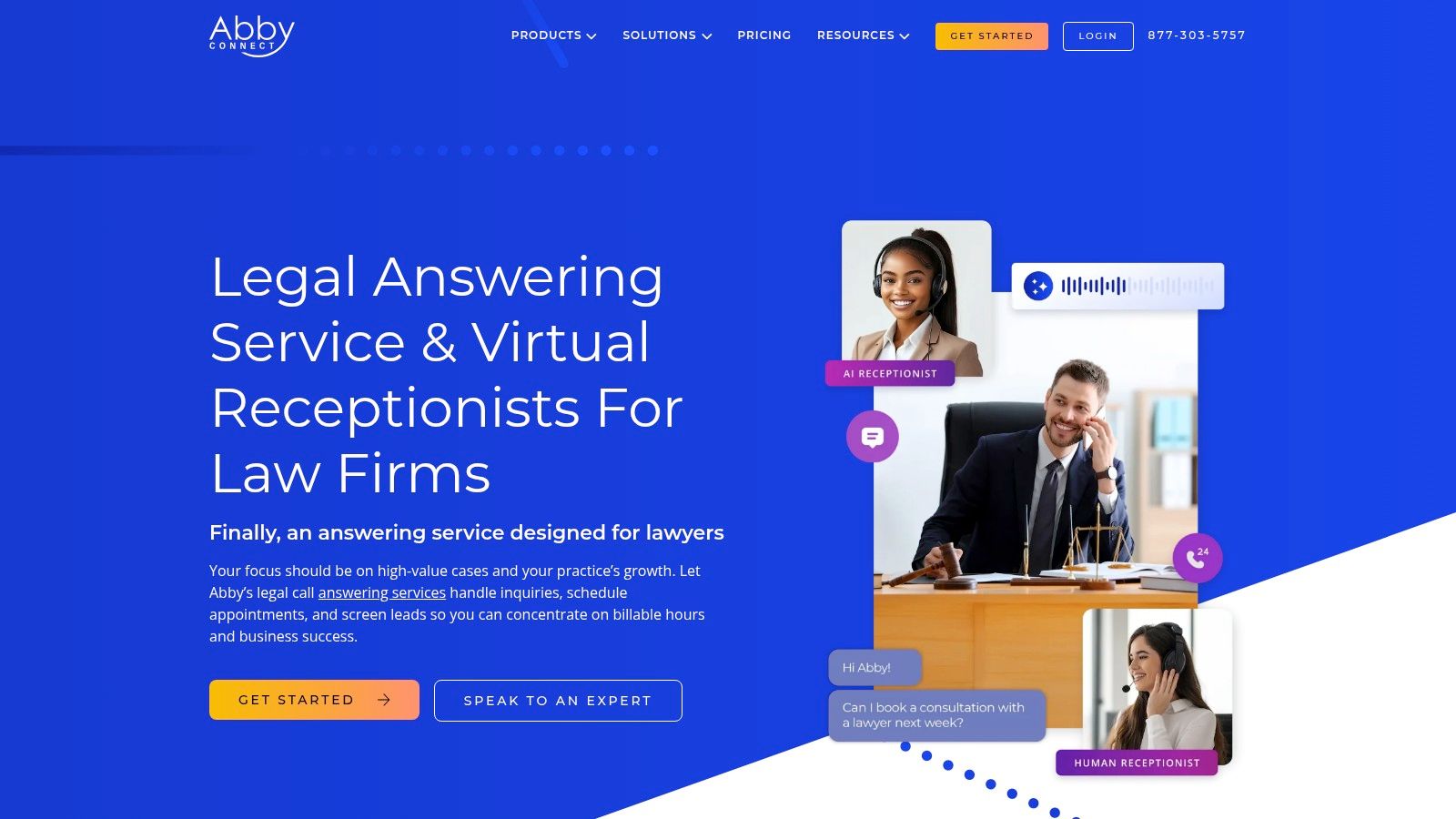
Say your firm receives routine scheduling calls alongside emotionally difficult prospective-client inquiries. Abby offers human, AI, and mixed handling, making it relevant when those conversations shouldn't all follow the same staffing model.
Its legal offering includes qualification, consultation booking, bilingual support, and integrations with tools such as Clio, Clio Grow, and Lawmatics. Those connections are valuable only if the resulting records contain usable fields, rather than a summary someone must re-enter.
- Use AI selectively: Route predictable, bounded tasks to automation.
- Preserve human access: Define escalation for distress, uncertainty, and explicit requests for a person.
- Inspect the record: Review matter type, contact details, appointment disposition, and follow-up ownership.
The Unclear Part Is Often Escalation
Mixed handling isn't a complete operating specification. Establish whether a human can join immediately, whether the caller must repeat information, and what happens outside your staff's availability.
The advertised starting price also isn't a total-cost estimate. Your proposal should identify usage allowances, overages, included intake tasks, and any differences between human and AI handling before you choose the split.
8. PATLive
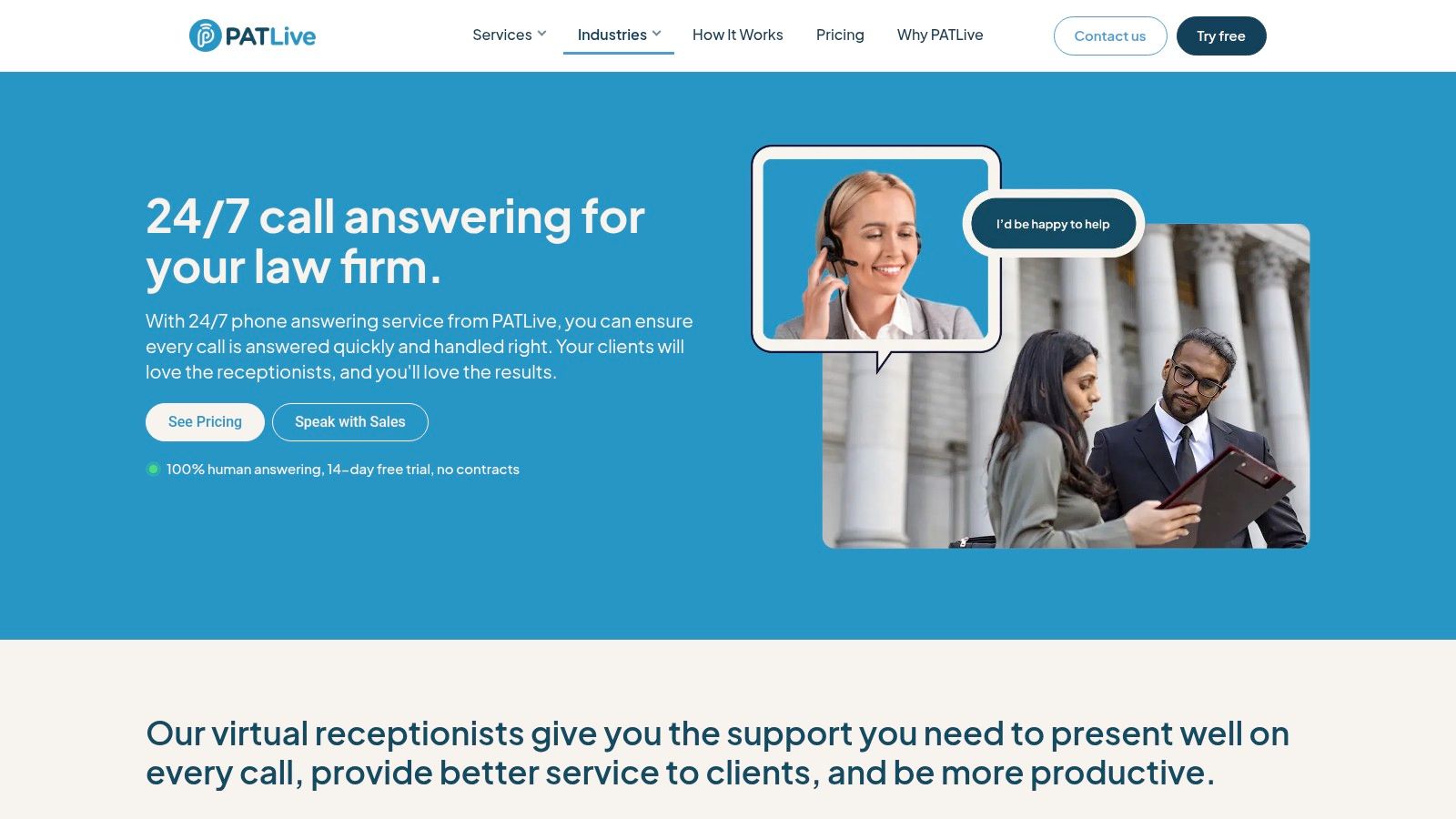
Some firms have already made the staffing decision: a person must answer the initial call. PATLive offers human-only call answering with U.S.-based receptionists, plus scheduling and intake support.
Its broader offering also includes live chat and outbound calls. That makes it relevant for firms wanting straightforward reception across more than an inbound telephone line, without adopting an AI-first approach.
Simple Coverage Still Requires Boundaries
PATLive serves multiple industries, so test the legal workflow rather than assuming general receptionist competence covers every intake situation. A receptionist can collect approved facts without being equipped to recognize every practice-specific issue.
- Good fit: Routine intake, appointment requests, and human overflow coverage.
- Commercial advantage: Published plan options, trial availability, and no-contract positioning support an initial comparison.
- Trade-off: Minute-based usage can become material when callers need longer conversations.
Use separate instructions for an existing client reporting an urgent development and a prospective client asking whether they have a case. Both deserve a respectful response, but they need different routing and different limits on what the receptionist says.
9. Posh
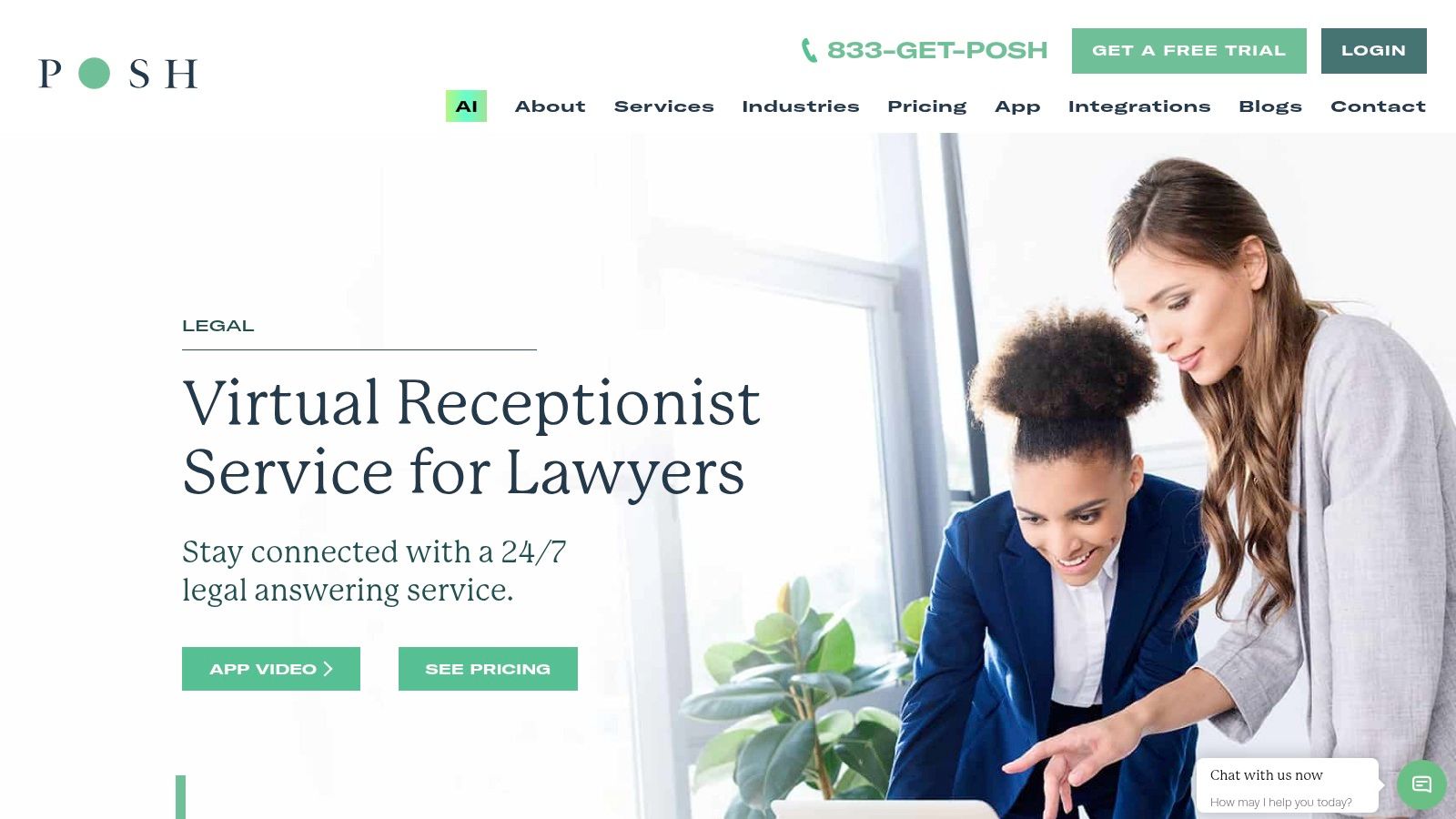
Posh is worth evaluating when call volume is modest but your firm still needs coverage beyond staff availability. Its offering combines live receptionists with AI handling for routine calls and transfers for more sensitive or complex conversations.
Message access through an app and portal, alongside text and email delivery, can help a small team monitor incoming inquiries. The risk is creating several notifications without assigning responsibility for responding.
Practical rule: Every intake message needs an owner and a disposition, not just a delivery confirmation.
Follow the Minutes Through the Transfer
Posh's minute-based, month-to-month options make the billing mechanics important. Establish how AI time, live receptionist time, and transfers are counted, particularly when a caller moves between handling modes.
The fit: Low-volume firms seeking flexible coverage and a combination of automation and human reception.
The limitation: A small bundle can look economical until ordinary intake conversations consume its allowance. Model your actual call lengths and test whether escalation preserves the details already collected, rather than making the caller start again.
10. Moneypenny
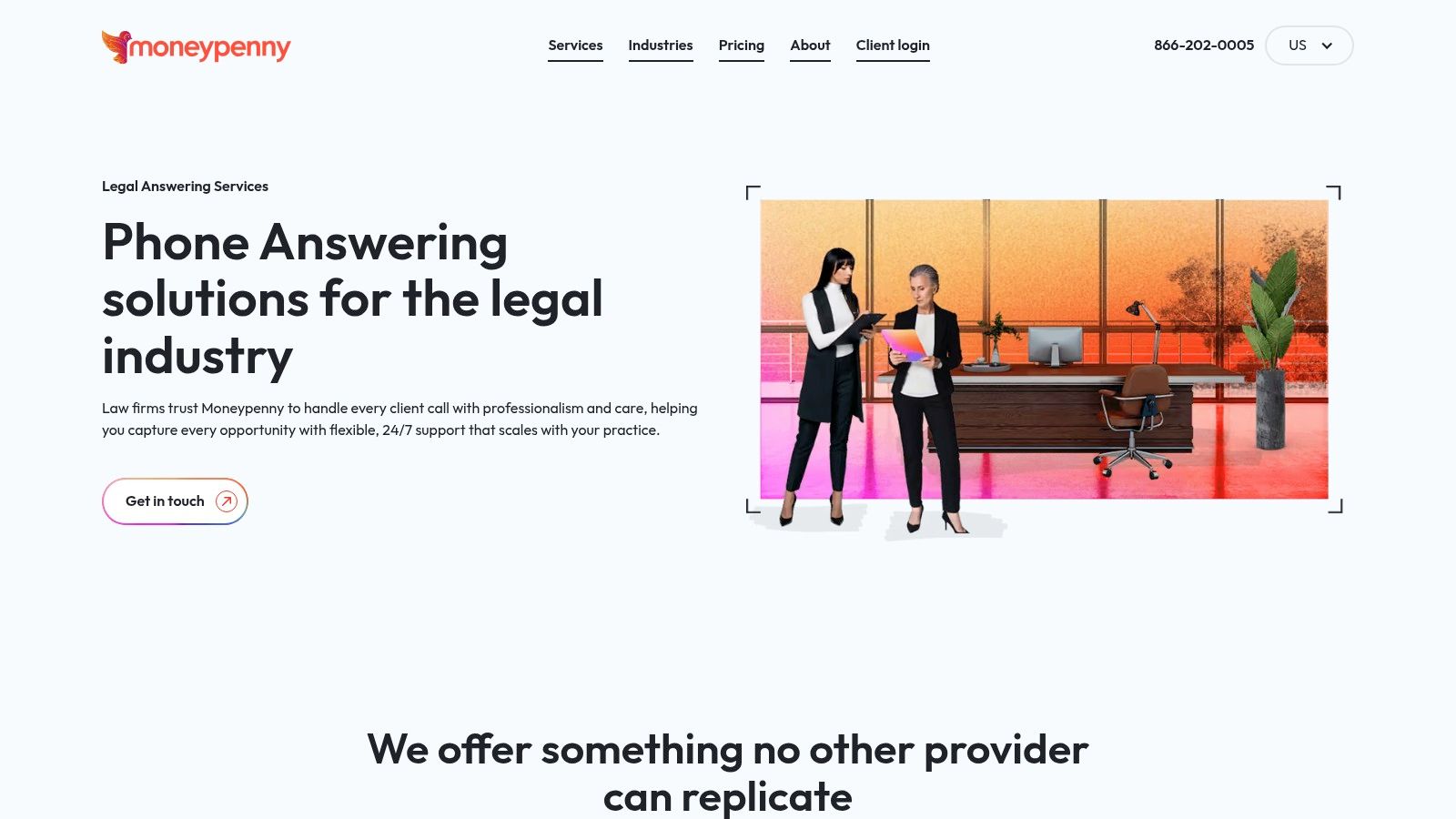
Moneypenny suits buyers considering a wider communications service, including reception, qualification, scheduling, and payment taking. Its legal answering service sits within a broader business-communications offering, with human and AI options.
Don't confuse receptionists using AI tools with an AI receptionist speaking directly to callers. Those are different service arrangements, and your proposal should identify which applies to each call category.
- Human-led coverage: Useful when your firm prioritizes live interaction.
- AI reception: Relevant for routine, tightly defined inquiries.
- Combined coverage: Potentially useful when escalation responsibilities are explicit.
More Functions Mean More Permissions
Payment taking and CRM updates extend the service beyond message delivery. Define who can see client records, what information the service may change, and how staff review exceptions.
Legal-service pricing requires a quote, so compare the complete configuration, including integrations and escalation. The limitation isn't a lack of features; it's the risk of buying a broad package without specifying the legal workflow. Evaluate training and scripts against your practice area rather than treating legal-sector customer examples as proof of fit.
11. LexHelper
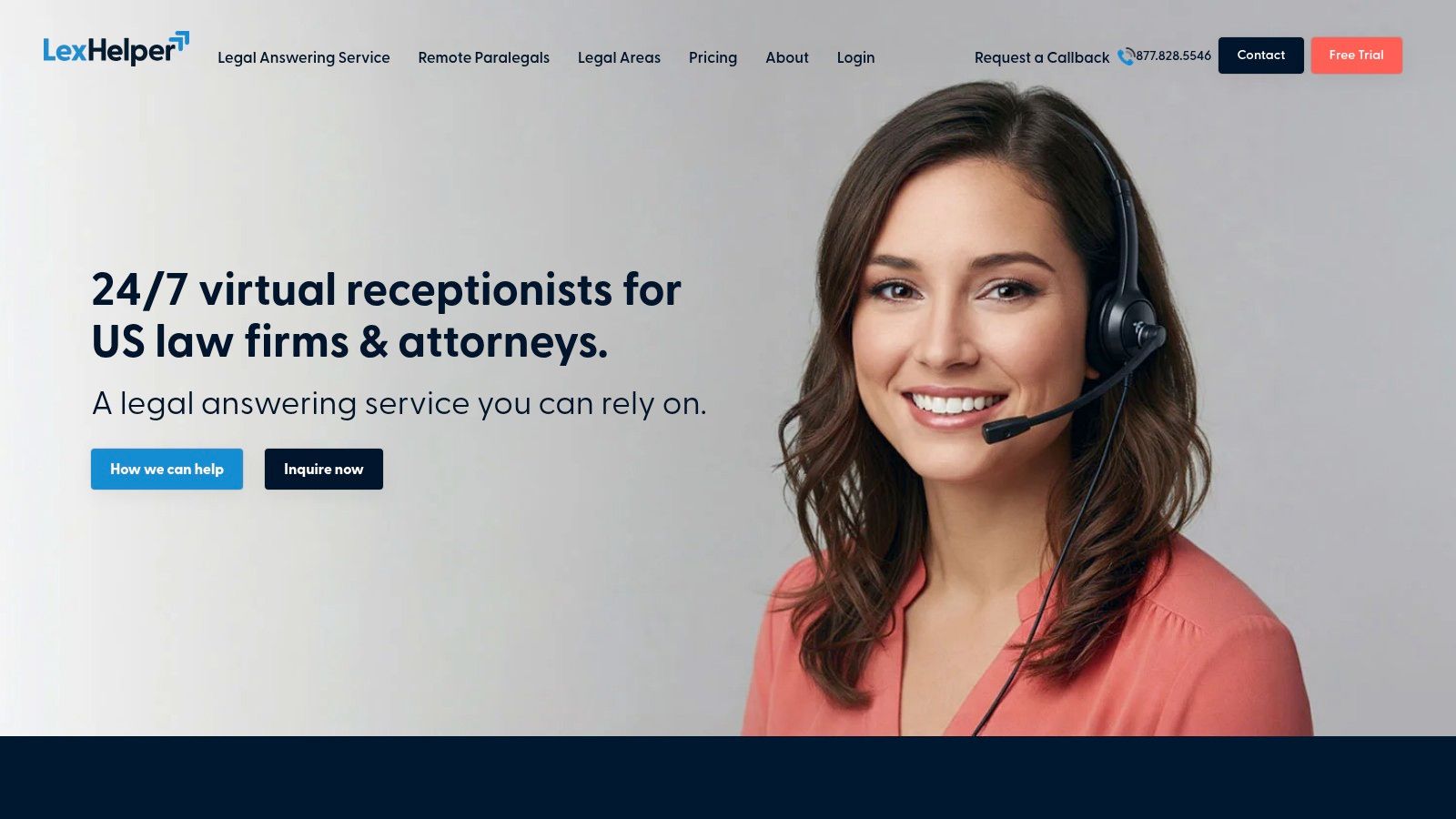
LexHelper makes the per-call versus per-minute decision particularly relevant. LexAnswer covers basic call handling, while LexAssistant extends into intake, calendars, outbound calls, and payment processing.
Start by deciding which work you're outsourcing. Comparing a message-taking plan with a receptionist-assistance plan on price alone gives you a misleading answer, even when the providers appear similar.
Match the Unit to the Work
Per-call billing can make longer conversations more predictable, subject to plan definitions. Per-minute billing ties spending to time consumed and may suit short, bounded tasks, but it doesn't naturally favor lengthy intake.
- LexAnswer fit: Firms primarily needing answering, qualification, and transfers.
- LexAssistant fit: Firms delegating more involved receptionist activity.
- Cost caveat: Include setup charges, possible additional fees, and usage beyond the selected bundle.
For broader law-firm AI workflows, separate tasks that require a conversation from tasks that happen after it. Call handling may be adequate while calendar updates, follow-up assignment, and record creation still need attention.
That distinction prevents you from buying more receptionist time to compensate for an administrative process that remains unfinished.
12. Cyndra Custom AI Answering Agents for Law Firms
Custom implementation makes sense when the intake rules don't fit a standard plan. We build and manage AI employees around the firm's workflow, connecting tasks across existing tools rather than requiring new software.
Team members interact with the agent in plain English, and it performs multi-step work across connected systems and reports back. For legal intake, the implementation conversation should define permitted information collection, routing, escalation, and the point at which an attorney takes over.
A Services Engagement, Not a Receptionist Subscription
- Workflow design: Build around the firm's actual intake and handoff requirements.
- Regulated-industry support: We sign DPAs and support regulated-industry requirements.
- Enterprise controls: Enterprise engagements include security review support, SLA-backed support, dedicated onboarding, and customized limits and controls.
The limitation is straightforward: this isn't self-serve software or a quick choice between standard minute bundles. It requires participation from the people who own intake, systems, and attorney supervision.
The starting point is a free 30-minute scoping call or Free Live Build. Customization is worth considering when standard services can answer the call but can't reliably complete the firm's downstream workflow.
Law firm answering services at a glance
| Provider | Focus | Starting price | Human / AI / Hybrid | Free trial | Best for |
|---|---|---|---|---|---|
| Lighthouse Legal | AI intake for personal injury firms | Custom quote | AI with human transfers | Not stated | 24/7 PI intake and caller screening |
| Answering Legal | Legal answering and intake | Quote required | Human | 400-minute trial | Firms seeking live, law-focused reception |
| Alert Communications | Legal answering, intake, and retainers | $240/month | Human | Not stated | Firms needing tiered legal communications |
| Smith.ai | Receptionist, intake, and call automation | $150/month AI; $300/month live | Human, AI, or hybrid | Free AI tier: 25 calls/month | Firms comparing live and automated handling |
| Ruby | Virtual reception, intake, and chat | About $245–$250/month | Human | Not stated | Firms wanting phone and chat coverage |
| LEX Reception | Legal reception and intake | Not published | Human | Offered; limits not stated | Firms needing customized legal call handling |
| Abby | Legal answering and intake | $164/month | Human, AI, or hybrid | Included, details not stated | Firms seeking flexible legal intake coverage |
| PATLive | Live answering and scheduling | $49/month pay-as-you-go | Human | 14 days | Firms preferring human-only answering |
| Posh | Legal answering and intake | $65/month plus usage | Human and AI | Trial period offered | Firms wanting AI with live-call escalation |
| Moneypenny | Legal answering and client communications | Quote required | Human, AI, or hybrid | Not stated | Firms needing broader communications support |
| LexHelper | Legal call handling and receptionist tasks | $42/month plus per-call fees | Human | Not stated | Firms comparing per-call and per-minute plans |
| Cyndra, Custom AI Answering Agents for Law Firms | Custom AI agents for law-firm workflows | Custom engagement; no price listed | AI | Free scoping call and Live Build | Firms needing tailored intake workflows and system integrations |
Pick the Model That Matches Your Call Volume, Not the Brand Name
Start with the calls your firm receives, not the package a vendor wants to sell. Separate prospective matters, existing clients, opposing counsel, administrative calls, spam, and urgent situations before choosing a staffing model.
Legal-only providers such as Answering Legal, Alert Communications, LEX Reception, and LexHelper belong on the shortlist when practice-specific intake is central. Smith.ai, Abby, Posh, and Moneypenny offer human and AI choices for firms balancing routine automation with access to people. Ruby and PATLive suit simpler reception needs or broader phone-and-chat coverage, while Lighthouse Legal is a focused option for personal injury screening.
Compare Completed Work, Not Answered Calls
Measure whether the service produces a usable intake record, an appropriate transfer, or a correctly booked consultation. The ABA's discussion of modern client intake supports evaluating qualification and urgency handling rather than treating every answered call as an equally valuable lead.
- For minute-based plans: Model conversation length, transfer time, and usage beyond the allowance.
- For per-call plans: Establish chargeable-call definitions, repeat-call treatment, and optional task fees.
- For flat or custom engagements: Define scope, volume assumptions, maintenance, and change requests.
Protect confidentiality before optimizing conversion. The legal-intake guidance on prospective-client information highlights concerns under ABA Model Rules 1.18, 1.6, 5.3, and 5.5, including confidentiality, supervision, and unauthorized practice. Have supervising counsel approve scripts and jurisdiction-specific requirements; collecting a complete case narrative isn't always appropriate before conflicts screening.
Choose Custom Work Only When You Need It
For workflows that standard plans can't capture, our engagement path runs through Consultation, Implementation, and Transformation. After launch, we expand AI coverage across departments on a monthly retainer. That model suits firms ready to improve the wider process, not those needing only basic message-taking.
Choose a shortlist, then run a trial against a week of real calls before signing anything. Review qualification accuracy, urgent-call routing, failed transfers, usable records, and the invoice your actual usage would produce. If standard plans leave critical handoffs unresolved, book Cyndra's free scoping call and bring your intake script, routing rules, and sample call dispositions so we can scope the workflow you need.